


Running a restaurant involves much more than serving great food and providing excellent customer service. Restaurant management problems can arise across sales, inventory, purchasing, employees, payments, customers, and day-to-day operations. When these processes rely heavily on spreadsheets, paper records, manual encoding, or disconnected systems, even simple tasks can become time-consuming and prone to errors. As a restaurant grows, these challenges can become even more difficult to manage.
This is where restaurant technology can make a difference. A modern restaurant management system can connect different parts of the business, automate repetitive tasks, and give owners and managers better visibility into their operations.
The right technology doesn’t replace good restaurant management—it makes good management easier, faster, and more accurate.
1. Inaccurate Sales Tracking and Reporting
The Problem
Sales are at the heart of every restaurant business, but keeping accurate sales records can be challenging when information is recorded manually or spread across multiple systems.
Restaurant owners may have difficulty answering basic questions such as:
- How much did the restaurant sell today?
- Which menu items are selling the most?
- What are the busiest sales periods?
- Which products generate the most revenue?
- How are sales performing compared with previous days or months?
Manually compiling this information from receipts, spreadsheets, and separate payment records takes time and increases the risk of errors.
Without reliable sales data, restaurant owners may also find it difficult to identify trends and make informed business decisions.
How Technology Solves It
A restaurant POS system can automatically record transactions as they happen. Instead of manually consolidating sales information, restaurant managers can use a centralized system to monitor sales and generate reports.
Depending on the system, restaurants can track sales by:
- Product or menu item
- Category
- Date and time
- Payment method
- Branch or location
- Sales performance
This gives restaurant owners clearer insight into their business and helps them make data-driven decisions about menus, promotions, staffing, and operations.
A restaurant POS system such as CukCuk can help centralize sales information and reporting, reducing manual work while providing a clearer picture of restaurant performance.
2. Poor Inventory Management and Stock Loss
The Problem
Inventory management is another major challenge for restaurants. Restaurants work with perishable ingredients, constantly changing stock levels, and multiple suppliers, making it easy for inventory discrepancies and waste to occur.
Common inventory problems include:
- Overstocking
- Understocking
- Expired ingredients
- Missing inventory
- Unaccounted stock movements
- Difficulty tracking ingredient consumption
- Time-consuming manual inventory counts
When inventory records are inaccurate, restaurants may order too much, run out of important ingredients, or fail to notice potential losses.
How Technology Solves It
Restaurant inventory management software can provide a more structured way to monitor stock.
A restaurant management system can help businesses:
- Monitor inventory levels
- Record stock movements
- Track incoming and outgoing items
- Monitor ingredient consumption
- Manage inventory across locations
- Identify potential wastage or discrepancies
Connecting inventory with sales data can make this even more useful. When sales and inventory information are linked, restaurant managers can better understand how products sold translate into ingredient usage.
For restaurants looking to improve restaurant inventory management, an integrated system can reduce reliance on manual spreadsheets and provide more consistent inventory records.
CukCuk connects sales and inventory management, helping restaurant operators manage stock alongside their day-to-day restaurant operations.
3. Difficulty Controlling Food Costs
The Problem
Food costs can have a significant impact on restaurant profitability. Even a small increase in ingredient costs or food waste can affect margins over time.
Restaurants may struggle with food cost management because of:
- Rising ingredient prices
- Food waste
- Inconsistent portion sizes
- Overstocking
- Untracked inventory usage
- Poor purchasing decisions
For example, if a restaurant knows how much a dish sells for but does not have a clear understanding of the ingredients and costs involved, it becomes harder to determine whether that menu item is actually profitable.
How Technology Solves It
Restaurant management software can help operators gain better visibility into the factors that affect food costs.
By connecting sales, purchasing, and inventory information, technology can help restaurants:
- Monitor ingredient usage
- Track purchasing activity
- Review product performance
- Identify high-cost items
- Detect potential waste
- Make better purchasing decisions
This information can also help restaurant owners evaluate their food cost percentage and determine which menu items contribute most to restaurant profitability.
Technology does not eliminate food waste or rising supplier prices, but it can give restaurant managers the information they need to respond more effectively.
4. Complicated Purchasing and Supplier Management
The Problem
Restaurants often work with multiple suppliers for meat, seafood, produce, beverages, packaging, cleaning supplies, and other products.
Managing these purchases manually can create several challenges, including:
- Creating purchase orders manually
- Comparing supplier prices
- Forgetting to reorder important items
- Ordering incorrect quantities
- Tracking received goods
- Maintaining accurate purchasing records
When purchasing information is disconnected from inventory, it can also be difficult to understand how orders affect current stock levels.
How Technology Solves It
A restaurant management system can centralize purchasing and supplier information in one place.
Technology can help restaurants manage:
- Supplier information
- Purchase orders
- Product costs
- Inventory receiving
- Stock replenishment
- Purchasing records
Connecting purchasing with inventory makes it easier to understand what has been ordered, what has been received, and how much stock is currently available.
For growing restaurants, this centralized approach can make purchasing more organized and reduce the administrative workload involved in managing multiple suppliers.
CukCuk connects purchasing with inventory and other restaurant operations, helping businesses create a more coordinated management process.
5. Slow and Error-Prone Order Processing
The Problem
Order processing can directly affect the customer experience. When orders are written down manually or communicated verbally between front-of-house and kitchen staff, mistakes and delays can occur.
Common issues include:
- Incorrect orders
- Lost or unclear order details
- Delayed communication with the kitchen
- Longer customer waiting times
- Miscommunication between staff
During busy periods, these problems can become even more noticeable.
How Technology Solves It
A restaurant POS system can streamline the process from the moment a customer places an order through payment and sales recording.
A typical digital workflow can look like:
Customer Order → POS → Kitchen → Payment → Sales Record
Instead of relying on handwritten notes or verbal instructions, staff can enter orders directly into the POS system. Order information can then be communicated more efficiently to the appropriate kitchen station.
This can help restaurants improve order accuracy, speed up service, and reduce unnecessary manual encoding.
For restaurant managers, digital order processing also creates a sales record that can be used for reporting and analysis.
6. Managing Multiple Payment Methods
The Problem
Customers today expect restaurants to offer convenient payment options. Depending on the business, customers may pay using:
- Cash
- Credit cards
- Debit cards
- E-wallets
- QR payments
- Other digital payment methods
While giving customers more choices can improve convenience, managing multiple payment methods manually can make reconciliation more complicated.
Restaurant staff may need to track different payment types separately, increasing the risk of recording errors or discrepancies.
How Technology Solves It
A modern restaurant POS system can help organize payment information by recording transactions and their corresponding payment methods.
This can help restaurants:
- Record different payment methods accurately
- Reduce manual encoding
- Track transactions
- Simplify reconciliation
- Improve sales reporting
Payment integration can also make the checkout process more efficient for both customers and staff.
With the right restaurant technology, payment information becomes part of the restaurant’s broader sales records rather than a separate process that has to be manually reconciled later.
CukCuk supports payment integration to help restaurants manage transactions more efficiently across different payment methods.
7. Difficulty Building Customer Loyalty
The Problem
Getting customers to visit once is only part of the challenge. Building repeat business is essential for long-term restaurant growth.
However, many restaurants have limited information about their customers and their purchasing behavior.
They may struggle to:
- Identify regular customers
- Track customer purchases
- Create effective loyalty programs
- Encourage repeat visits
- Personalize promotions
- Measure customer engagement
Without customer data, promotions may be based on guesswork rather than actual customer behavior.
How Technology Solves It
A restaurant loyalty system can help businesses create more structured customer retention strategies.
Technology can allow restaurants to:
- Create rewards programs
- Track customer activity
- Record purchase history
- Encourage repeat purchases
- Build customer databases
- Offer targeted promotions
For example, restaurants can use loyalty programs to reward returning customers instead of relying solely on broad discounts.
When customer information is connected with sales data, restaurants can gain a better understanding of purchasing patterns and use those insights to create more relevant promotions.
CukCuk’s loyalty capabilities can help restaurants build stronger customer relationships while connecting loyalty activities with their wider restaurant operations.
8. Managing Delivery and Online Orders
The Problem
Online ordering and delivery have become important sales channels for many restaurants. However, managing orders from different platforms can create additional operational complexity.
Restaurants may receive orders through several channels, resulting in:
- Duplicate order entry
- Manual encoding
- Order delays
- Increased workload for staff
- Difficulty tracking online sales
- Communication errors
If staff members have to manually transfer every online order into a restaurant’s POS system, the process takes more time and creates another opportunity for mistakes.
How Technology Solves It
Restaurant technology can help centralize orders from different channels and reduce repetitive manual encoding.
Depending on the available integrations, a restaurant management system can connect with online ordering and delivery platforms so that orders can flow more efficiently into restaurant operations.
This can help restaurants manage:
- Delivery orders
- Online ordering
- Order information
- Sales records
- Multiple ordering channels
CukCuk supports delivery app integration, helping restaurants connect online orders with their broader restaurant management workflow.
The goal is simple: instead of managing every ordering channel separately, restaurants can bring more of their orders and sales information into one centralized system.
9. Lack of Real-Time Business Visibility
The Problem
Restaurant owners cannot always be physically present at their restaurants. This can make it difficult to monitor operations, particularly when managing multiple locations.
Owners and managers need access to information such as:
- How much did we sell today?
- What are our best-selling products?
- Which branch is performing better?
- How much inventory do we have?
- Are sales increasing or decreasing?
When this information is only available through manual reports, owners may have to wait until the end of the day—or longer—to understand what is happening.
That delay can make it harder to respond quickly to operational problems.
How Technology Solves It
Cloud-based restaurant management systems can provide more convenient access to business information through a centralized platform.
Instead of collecting information from different systems, restaurant owners can use a cloud POS system to monitor relevant sales and operational data more efficiently.
The basic principle is:
Real-Time Data + Centralized Management + Better Decisions
With better visibility, restaurant owners can respond more quickly to changes in sales, inventory, and overall business performance.
This becomes particularly valuable for restaurant groups and businesses with multiple branches, where centralized information can help management compare performance and maintain greater operational control.
CukCuk’s cloud-based platform is designed to centralize restaurant operations and give owners and managers greater visibility into their business.
10. How CukCuk Can Help Solve Restaurant Management Problems
The restaurant management problems above are often connected.
Sales affect inventory. Inventory affects food costs. Purchasing affects stock levels. Orders affect sales records. Customer loyalty affects repeat purchases. Delivery affects order management.
When these processes operate independently, restaurant owners may spend significant time moving information between systems and trying to understand what is happening across the business.
This is where an integrated restaurant management system can provide value.
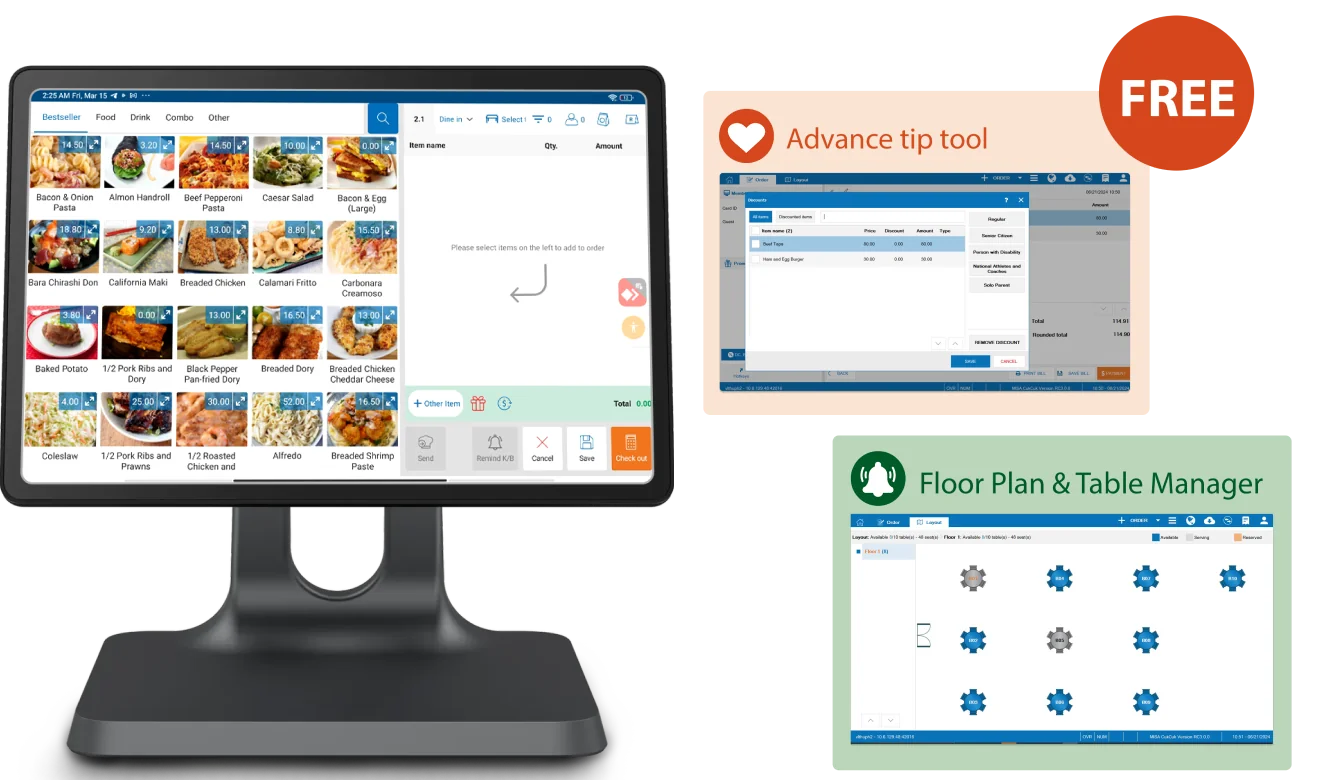
CukCuk brings key restaurant operations together through a centralized platform designed to support restaurant businesses.
Its capabilities can help restaurants manage areas such as:
- Sales management — Record transactions and analyze sales performance.
- Restaurant POS — Streamline order processing and checkout.
- Inventory management — Monitor stock and inventory movements.
- Purchasing — Organize supplier and purchasing activities.
- Payment integration — Manage different payment methods and transaction records.
- Customer loyalty — Build loyalty programs and encourage repeat purchases.
- Delivery integration — Connect delivery and online ordering channels.
- Cloud-based management — Access centralized restaurant information more conveniently.
The benefit of using an integrated restaurant management system is that these functions can work together rather than existing as isolated processes.
For restaurant owners in the Philippines, choosing restaurant software that can support sales, inventory, payments, customer management, and online ordering can help create a more efficient operational workflow.
Choosing the Right Restaurant Management System
Not every restaurant has the same needs. A small café may require a simpler setup than a growing restaurant group with multiple branches.
Before choosing restaurant management software, consider whether the system can support your current operations and scale with your business.
Key features to evaluate include:
- POS and sales reporting – Can you easily track sales and generate useful reports?
- Inventory management – Can you monitor stock and identify discrepancies?
- Purchasing – Can you manage suppliers and purchase orders?
- Food cost visibility – Can the system help you understand ingredient usage and costs?
- Payment integration – Can it support the payment methods your customers use?
- Customer loyalty – Can you create and manage rewards programs?
- Online and delivery integration – Can you centralize orders from different channels?
- Cloud access – Can owners and managers access important information remotely?
- Multi-branch management – Can the system support your business as it expands?
The right restaurant POS system should not simply process transactions. It should help connect the different parts of restaurant management so owners and managers can spend less time dealing with administrative tasks and more time improving the business.
Final Thoughts
Restaurant management comes with many challenges, from inaccurate sales reporting and inventory losses to complicated purchasing, payment management, customer retention, and online ordering.
Manual processes may work when a restaurant is small, but as operations become more complex, disconnected systems can make management increasingly difficult.
Restaurant technology can help by centralizing information, automating repetitive tasks, improving accuracy, and giving restaurant owners better visibility into their operations.
Whether you’re looking for restaurant management software in the Philippines, a restaurant POS system, or a more comprehensive restaurant management system, the key is to choose technology that connects the functions your business depends on every day.
CukCuk brings sales, inventory, purchasing, payments, loyalty, delivery integration, and cloud-based restaurant management together in one platform—helping restaurant owners manage their operations with greater efficiency and confidence.
Ready to upgrade your restaurant’s POS system?
Move beyond basic transaction processing with a cloud-based POS designed for modern F&B businesses.
CukCuk can help bring sales, inventory, orders, customers, reporting, payments, and restaurant operations into a more connected platform.
Whether you run a café, quick-service restaurant, full-service restaurant, bakery, or growing multi-branch F&B business, the right POS can give your team better operational visibility and help you make more informed decisions.